Let’s Livestream Factories
Topics worth your time: livestreams from JLCPCB’s factory floor, understanding how Formlabs took a $2,600 printer down to $699, the challenges of standing up a domestic PCB fab, how a fake tire sensor once duped a Tesla, and more.

Interesting Links
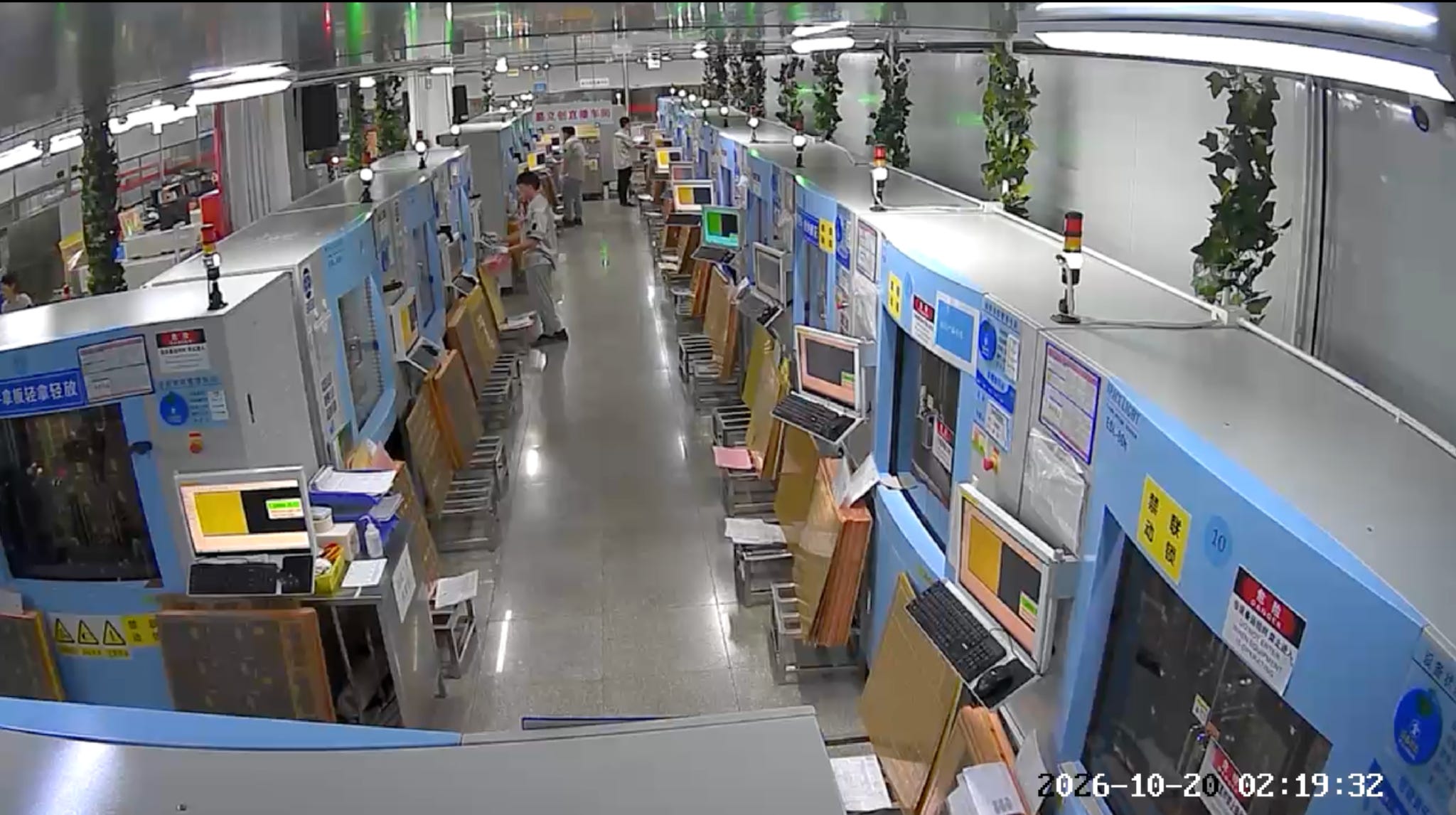
If you want to understand how factories work (or at least one version - high-volume, highly automated), look no further than printed circuit board manufacturing. JLCPCB has a livestream feed of their factory floor showcasing process steps and the individual equipment. The formula is as follows for board assembly, which in itself is a fairly standardized process: run a fleet of pick-and-place machines (a high-speed SMT machine costs roughly $150-400K), keep them loaded with reels of standardized components, and charge extra for anything that requires an operator to load a different reel. Boards can vary enormously in what they do and the resulting complexity, but most are built from the same short list of fundamental building blocks: resistors and capacitors, diodes and voltage regulators for protection and power management, LEDs, or crystals for timing. (A gross simplification, but a good way to understand this is as the electrical equivalent of nuts and bolts). JLCPCB keeps ~1,600 of these permanently loaded as “Basic” parts, free to use; anything outside of the list from a catalog of 700K+ components is a custom configuration, so it’s $3 per unique part.
For a sense of scale on all possible components in existence, Octopart once tracked over 83 million parts from 10,000+ manufacturers in 2023.
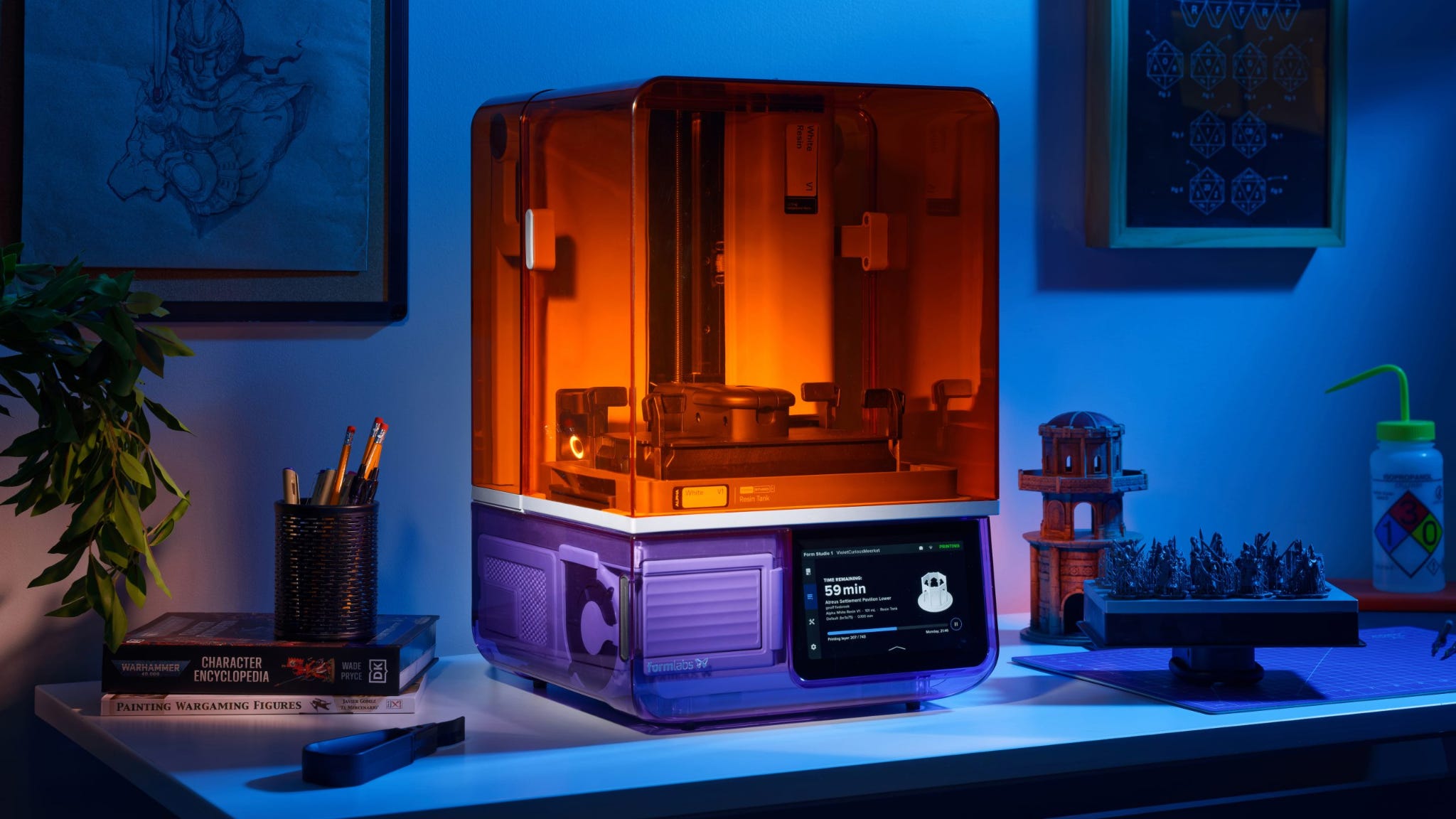
Jeff Geerling has a great review of Formlabs’ new Form Studio 1, a $699 resin 3D printer that also doubles as a case study in cost-down engineering. The question on our mind: how do you take the $2,600 Form 4 and cut the cost by a factor of nearly four? It turns out that, as with most things in value engineering, once the core technology is proven the savings come from building on an existing platform (the Studio 1’s light engine is adapted from the Form 4) and cutting secondary features that are non-critical to core function. Think trade-offs like removal of the soft-close hinge, a dedicated resin mixer, or support for more advanced resins (9 resin types vs. 22). Two deeper engineering tangents from the video: 1) Stefan adhesion is the force it takes to pull two flat surfaces apart through a thin film of liquid, which is why the first layers of a resin print go more slowly. 2) Resin printers can also print flexible elastomers now with surprisingly high fidelity, such as Formlabs’ Flexible 80A, though it does cost $199 a liter. More on the different flavors of resin printing (SLA vs. DLP vs. MSLA vs. LCD) which are all technically still stereolithography, meaning each method cures liquid resin with light.
In a related vein to the first topic in today’s newsletter, if JLCPCB’s playbook is this visible, why hasn’t anyone replicated it, in the US or anywhere else outside China? Vincent Casey has earnest notes in Do Not Make the “American JLC”, and the short answer is that the ecosystem around it is much harder to copy than the model itself. A couple of observations below.
Don’t take venture capital, or if you do, don’t compete with simple or standard boards. Standard 4–6 layer boards are sold at near-zero or even negative margins from international fabs, while standing up a domestic fab takes an estimated ~$5-12M for basic facilities and machinery. His advice is to specialize: RF or 8+ layer boards, where most medical/defense work (and the margins) lives.
Grow slowly. Speed is the one thing a domestic fab can win on, but scaling too fast stretches lead times past what customers will tolerate, and venture capital isn’t designed for extended timelines. SendCutSend is a good example of this lesson, though it’s now at the stage where growth finally meant raising capital to meet demand.
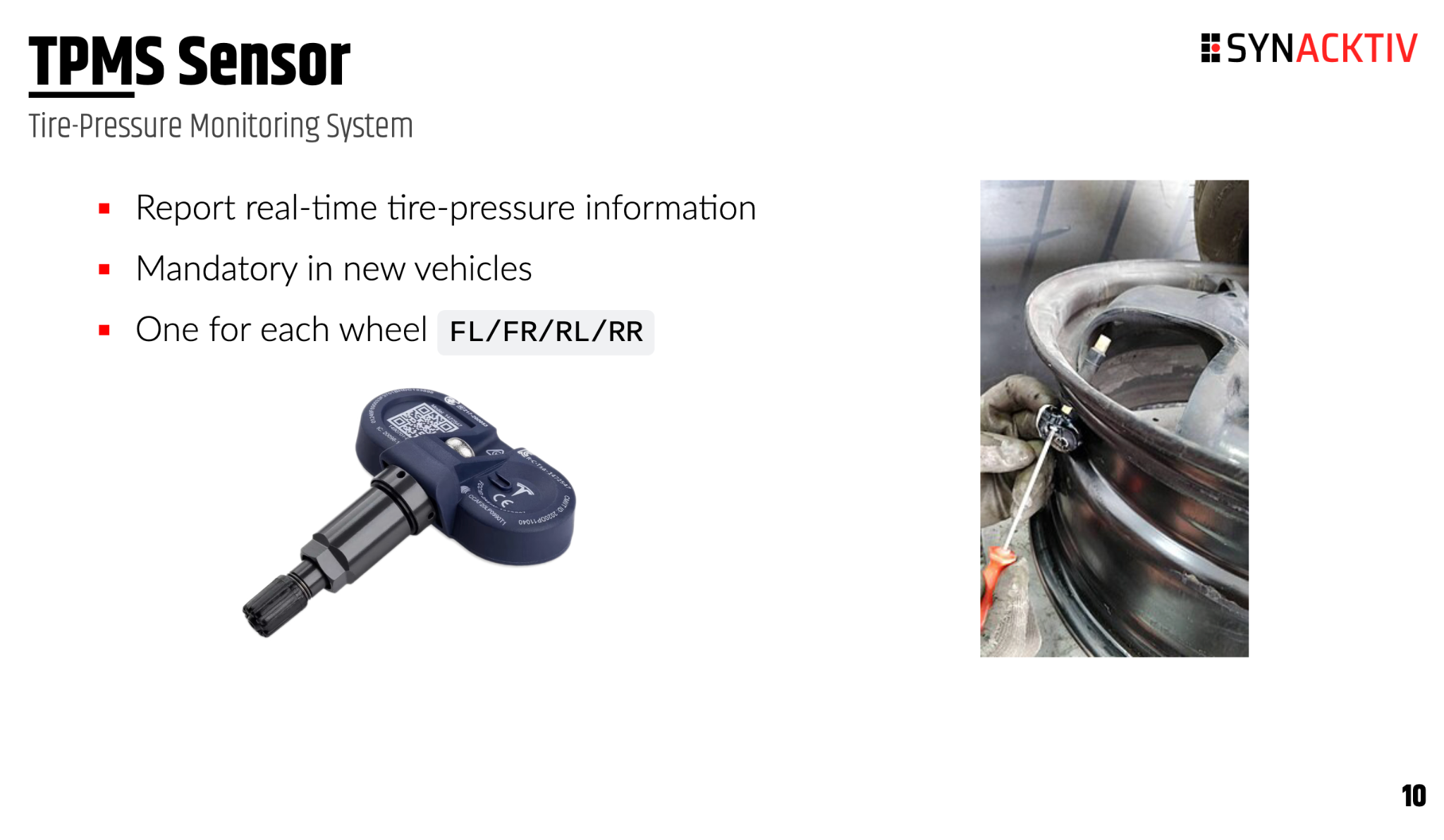
Dumb technology is often harder to trick than smart technology. Connected hardware that can update through software OTAs has become the default for companies that can pull it off, but it also widens the attack surface. This presentation from a French security firm on the exploit that won them $200K and a Model 3 at Pwn2Own, a hacking competition, is a good example. On a Tesla, the tire pressure (TPMS) sensors pair over Bluetooth with VCSEC, the car’s security controller, which also handles phone-as-key unlocking and authorizes the car to start. By using a cheap hobbyist board to pose as a new tire sensor, the researchers could hand the car a deliberately malformed security certificate during pairing that tricked it into writing outside the space reserved for the certificate, letting them swap in their own code for the car to run. Tesla patched it shortly after, but the lesson stands: every smart feature is another way in.
A couple more loose ends from the PCB discussion above, one cautionary and one practical:
Tempo Automation, a SF-based startup, once tried to compete on online-quoted, quick-turn PCB assembly (went public via SPAC in 2022, gone a year later). For a company to succeed today, the difference now may be the ecosystem, with policy and reindustrialization capital providing subsidization that the market back then never did.
A power user tip for component search. JLC Parts is a community-built parametric tool to search JLCPCB’s entire parts library. Outside the JLC ecosystem, Zenode is a newer option for searching all possible components in natural language.
And upcoming workshops on our radar:
Does a part really need to be custom, or can it be OTS? Understand the framework for making the call. (10/26)
Interested in building medical devices? Join us live to talk through unique considerations in medical device prototyping. Register here (11/3).
Presented by Flow: Requirements Management and AI agents to align CAD, simulation, code, and test
You increase range by 10%. The battery pack grows. Now the mass budget’s off, the mount bolts need a new torque spec, and a few test cases are stale. Somewhere, a line of code still assumes the old pack. Reconciling all of this correctly takes days.
With Flow’s agents you find the downstream impacts that same afternoon, and changes are identified and pushed across the tools the engineers already use.
Thousands of engineers at Rivian, Stoke Space, Astranis, Intuitive Machines, and Joby use Flow to iterate faster while maintaining engineering rigor.

Startup News
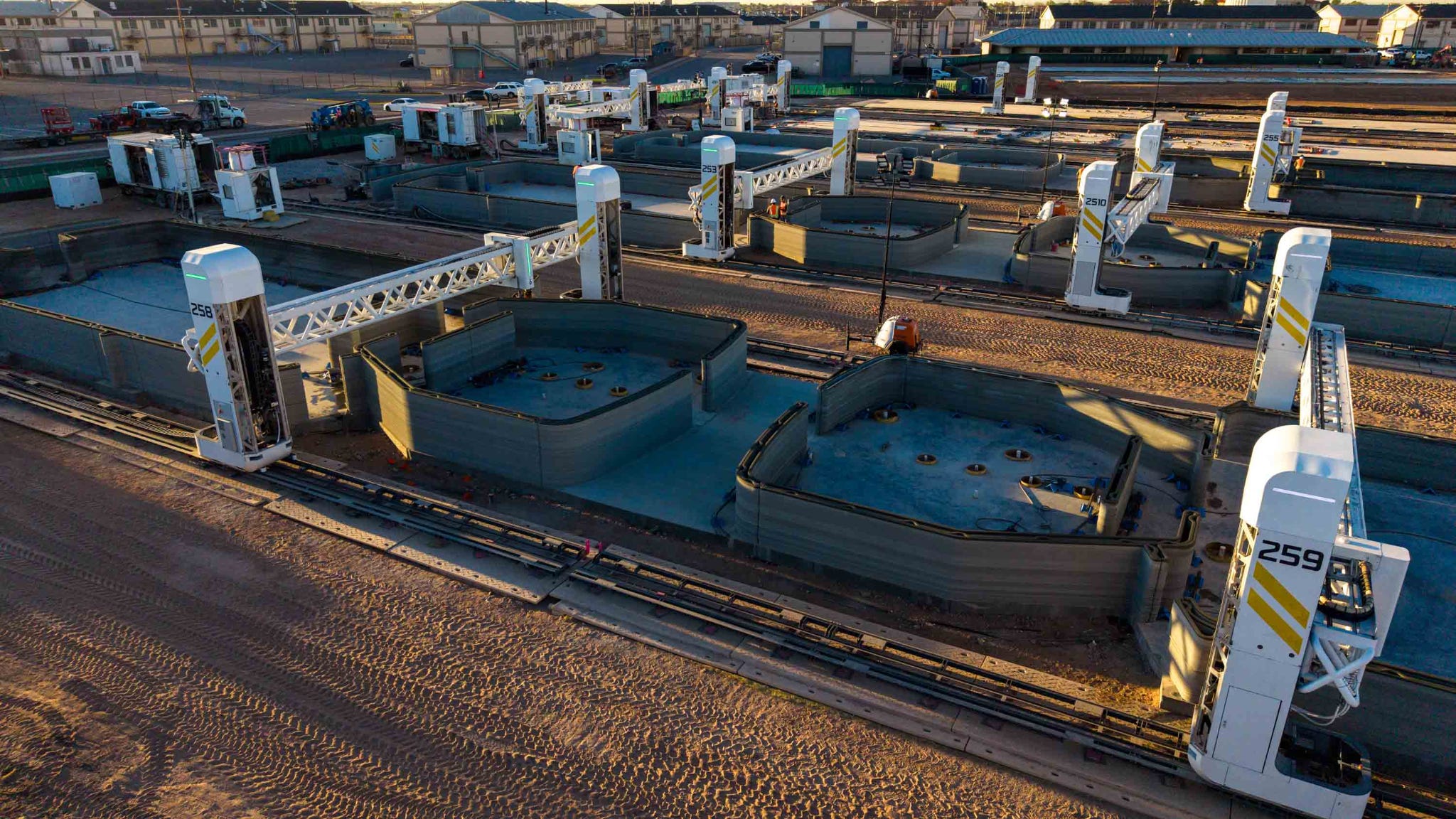
ICON raised a $200M Series D to manufacture and deploy its multi-story 3D-printing systems for home construction and expand into new markets. The company combines robotics and proprietary building materials to construct homes and commercial buildings. It says it has built more than 270 homes and structures across five states and two countries.
Dream Labs raised a $90M seed round to expand the tasks and robot types supported by its Dream-1 model, with most of the funding going toward compute. Founded by ex-Nvidia robotics researchers, the company trains its model on human video to operate robots using camera feeds and plain-text instructions. The API costs $3/hour for the flagship model or $0.75 for a smaller version. The round was led by B Capital.
Multiply Labs raised a $75M Series B to expand production of its drug-manufacturing robots and grow its headcount. The robotic system automates manual steps in cell and gene therapy manufacturing using drugmakers’ existing instruments and processes. Pharmaceutical companies own and operate the systems, keeping production in-house. The round was led by Patrick Soon-Shiong with NantWorks.
Mecka AI raised a $60M Series B to expand its robot-training data infrastructure and commercial robot deployments. The company builds sensor hardware to record people performing tasks in homes and workplaces, then converts those recordings into training data. It says it surpassed $100M in ARR in June. The round was led by Sequoia Capital.
Kairos Power secured $643M in private and government funding to support construction of its demonstration reactor in Tennessee. The Hermes 2 plant is expected to supply up to 50 MW to the Tennessee Valley Authority’s grid starting in 2030, supporting Google’s regional data centers. The financing includes $368M from private backers, alongside $275M from the U.S. Department of Energy.
Open Jobs
Describe your ideal role on our job board, and we’ll find matches. If you’re hiring, promote your open role here.
Early Career:
Pascal Technologies is looking for a Test Engineer in Watertown, MA ($90–100K)
Medra is looking for a Mechanical Engineering Intern (Winter 2026) in San Francisco, CA
Lumafield is looking for an Associate Product Manager (Hardware) in Boston, MA ($110–140K
Mid-Level:
Terranova is looking for a Mechanical Engineer in Berkeley, CA ($90–140K)
Mind Robotics is looking for an Electrical Design Engineer, Power Electronics in Palo Alto, CA
Senior to Staff:
Valar Atomics is looking for a Director of Model & Simulation in Torrance, CA ($225–300K)
Fluidstack is looking for a Head of Supply Chain in Austin, TX ($396–435.6K)
Tools From Our Sponsors
Design & Simulation
Duro — AI-native PLM that centralizes part data, manages change orders, and connects the whole stack so your team can focus on execution, not administration.
Onshape for Startups – Free access to Onshape Professional or Onshape Government (compliant with ITAR/EAR) for hardware startups and entrepreneurs.
Manufacturing
Loombotic – Instant-quote custom wire harnesses. Upload drawings or design online, fast turnaround.
Xometry — Instant quoting on custom parts, from R&D prototypes to high-volume production runs.
Fictiv – On-demand custom manufacturing from prototype to production.
Access Every Link We’ve Ever Shared 🎞️
Refer three friends to Hardware FYI and unlock our full archive.
Missed an issue? Hunting for that one link? Every tool, guide, and article we’ve ever shared is in here.
P.S. If you find something interesting—an article, tool, funding round, project, really anything—send it our way.
P.P.S. 20,000+ engineers, founders, and operators read this newsletter. If you want to reach them, get in touch.